Beachfront Property in the Dominican Republic: The Trade-Offs Behind the View
If you are searching for beachfront property in the Dominican Republic, it is worth saying at the start what Itza Golden Residences is and is not. It is not beachfront. Its four towers in Golden Lakes, Cap Cana, face a navigable lake with a lakeside beach, and Juanillo Beach is an 8-minute drive away. That makes this page a fair place to set out the trade-off you are really weighing: a home on the shoreline itself, or one a few minutes back from it. Both are sensible choices. They cost different things, and not only at purchase.
What Itza is, stated plainly
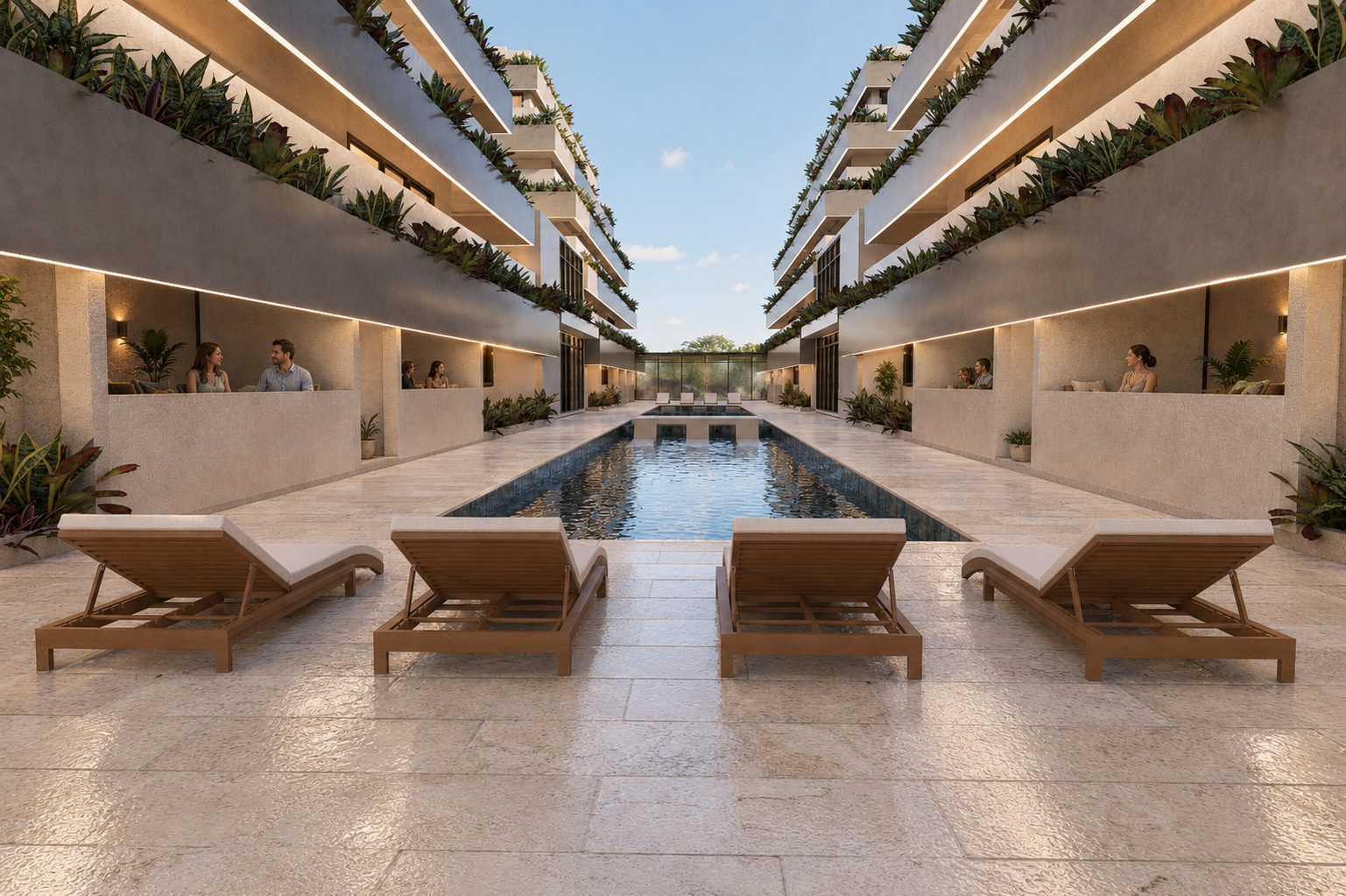
Itza is 52 residences in four stepped towers on El Dorado Avenue, in the Golden Lakes district of Cap Cana. The site fronts a large navigable lake used for non-motorised water sports, and the project's own lake club sits on a lakeside beach. The sea is a short drive: Juanillo Beach and Marina Cap Cana are each 8 minutes by car, the marina 3.1 miles away, and Punta Cana International Airport is 16 minutes.
So an Itza buyer is choosing a water view and a beach day by car rather than surf under the balcony. The sections below are about whether that is the right trade for you, which depends far more on how you will use the home than on the view.
Salt air: the maintenance line nobody lists
Wind off the sea carries salt, and salt is hard on anything metal. On a building right at the water it settles on railings, window hardware, door fittings, light fixtures and, above all, on the outdoor units of air-conditioning systems, whose fins and coils sit in the open all year. None of this makes a seafront building a bad building; it means the maintenance schedule is shorter, the materials have to be chosen for it, and the condominium's budget for repainting and replacement carries that cost for as long as you own.
A few minutes inland the exposure is lower, not absent: this is still a Caribbean coast, and humidity and sun do their own work. But the step back from the shoreline is one of the few decisions that changes a building's running cost every year without changing anything about the building itself. When you compare a beachfront listing with an inland one, ask both for the condominium's maintenance history, not only its current monthly fee.
Hurricanes, storm surge and the insurance conversation
Storms can form in the Atlantic at any point between 1 June and 30 November, the official hurricane season. Two different forces come with a storm, and it pays to keep them apart when you talk to an insurer. Wind reaches every building on the coast, whatever its distance from the water. Storm surge, the sea pushed ashore by the storm, is concentrated on the shoreline and on low ground beside it, and that is where a beachfront position carries a risk an inland one largely does not.
Dominican property policies commonly include hurricane cover with a deductible expressed as a percentage of the insured amount, while flooding from surge is often a separate rider. Before buying anywhere on the coast, ask for a quote on the specific address that states, in writing, how wind is covered, how flood and surge are covered, and what the deductible is. On the structure itself, the Dominican building code in force sets mandatory minimum wind loads for all new buildings and their facades; ask your engineer or attorney how the plans you are buying were designed against it, rather than relying on a marketing claim about any building.
Access: the sand is public either way
Under Ley 305 of 1968 and the Constitution, the strip of shoreline measured back from the high-tide line is public property in the Dominican Republic. It cannot be sold or enclosed as private beach. A beachfront title therefore ends where that strip begins, and the owner of a near-beach home uses exactly the same sand by law. The same public-domain treatment reaches the margins of lakes and lagoons as well as the sea, so waterside land of any kind begins behind a public strip.
What a beachfront position really buys, then, is proximity and the right to arrive at the sand on foot. What land behind the strip can control is the path to it: parking, walkways and beach furniture may belong to a hotel or a club. From Itza, the beach is a drive; weigh that against how often you expect to go.
The two positions side by side
Neither column wins outright. The table sets the factors next to each other so you can see which ones matter for the way you plan to use the home.
| Factor | Directly on the sea | A short drive inland (Itza) |
|---|---|---|
| Outlook | Open sea, surf audible | Lake view; lakeside beach and lake club on site |
| Getting to the sea | On foot | Juanillo Beach 8 minutes by car |
| Salt exposure | Highest; shorter maintenance cycles for metal and air-conditioning units | Lower, though still coastal |
| Storm surge | The position most exposed to it | Set back from the sea; ask how the lake behaves in heavy rain |
| Insurance questions | Wind, surge rider and deductible all critical | Wind and deductible still critical |
| Water sports | Sea swimming and whatever the beach offers | Non-motorised sports on a navigable lake at the door, sea by car |
| Purchase price | Shoreline land is scarce and priced accordingly | Itza from $378,000 |
Who should hold out for the sea
If waking to the sound of the surf is the reason you are buying, nothing inland replaces it, and you should buy beachfront with the maintenance and insurance questions above answered in writing. If instead you picture the beach a few mornings a week, a pool and a water view the rest of the time, and a home you can leave for months without worrying about salt and surge, a position like Itza's is the calmer ownership. It also spends the budget on the residence rather than on the shoreline: at Itza that means terraces of every level, a semi-olympic lap pool running the length of the project, and delivery planned for Q4 2029.
Common questions
- Is Itza Golden Residences beachfront?
- No. It faces a navigable lake with a lakeside beach in Golden Lakes, Cap Cana. Juanillo Beach is 8 minutes away by car.
- Can I own a private beach in the Dominican Republic?
- No. The shoreline strip is public property under Ley 305 of 1968 and the Constitution, so no title includes the beach itself. Land behind it can be private and can control access routes such as parking and walkways.
- Does home insurance in the Dominican Republic cover hurricanes?
- Policies commonly include hurricane cover with a deductible set as a percentage of the insured amount; flooding from storm surge is often a separate rider. Ask for both, in writing, on the specific address.
- When is hurricane season in the Dominican Republic?
- The official Atlantic season opens on 1 June and closes on 30 November, with storms possible at any point in between.
Want the details for your own situation?
Ask about availability, layouts or the buying process, and someone from the sales team will get back to you.
Get in touch