Dominican customs and the empty rooms of an Itza residence
An Itza residence is handed over equipped but unfurnished: the stove, fridge, oven, washer, dryer and VRF air conditioning are fitted, while the sofa, beds, dining table and everything soft are yours to source. That single fact decides how much of Dominican customs you will ever deal with. Furniture bought from a Dominican store never enters your name at a port; furniture you ship from home does, and it is assessed on its value plus freight and insurance. This guide works through the decision room by room, explains the duty-free route that exists for people who take up residence, and sets the order in which to decide things before handover in Q4 2029.
What the handover includes, and the list customs never sees
Start from what is already inside the door, because every fitted item is something you will not freight, clear or pay tax on. The developer's specification lists a stove, fridge, oven, washer and dryer in every residence, high-efficiency VRF air conditioning, island kitchens with quartz tops, porcelain floors and floor-to-ceiling windows. Lights and air conditioning run on Alexa-compatible smart controls. Those are the heavy, wired and plumbed pieces that make a move expensive when they have to cross an ocean, and at Itza none of them do.
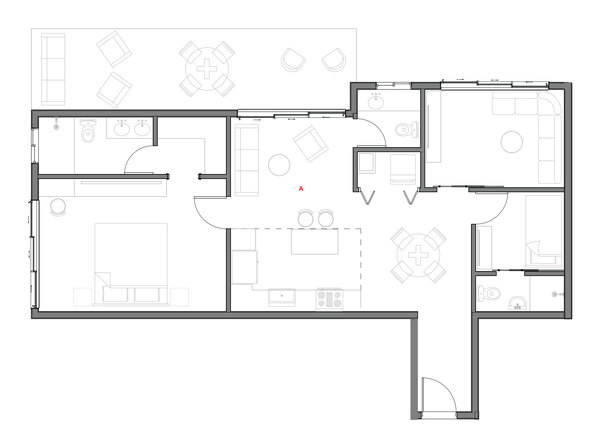
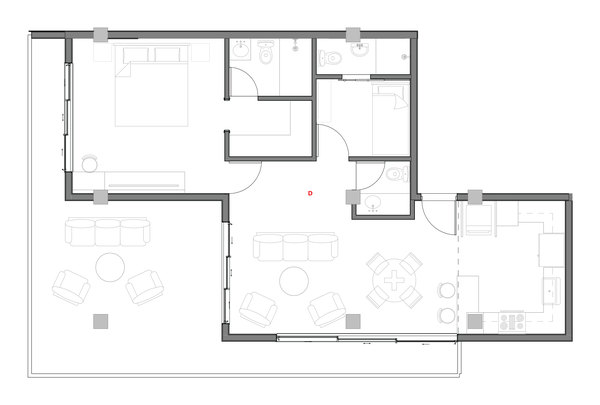
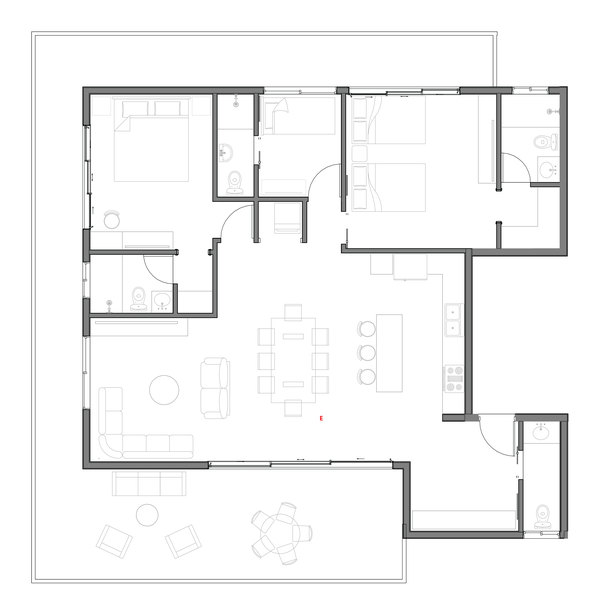
What remains is furniture, textiles, kitchenware, electronics and the personal layer that makes a flat yours. The scale of that list depends on the layout you choose. Residences run from 1,112 to 2,648 sq ft in total area including terraces, and the smallest one currently available is 1,309 sq ft, so even the entry layout is a full home to furnish rather than a studio. Every layout also carries a service bedroom with its own bathroom, one more room to plan for.
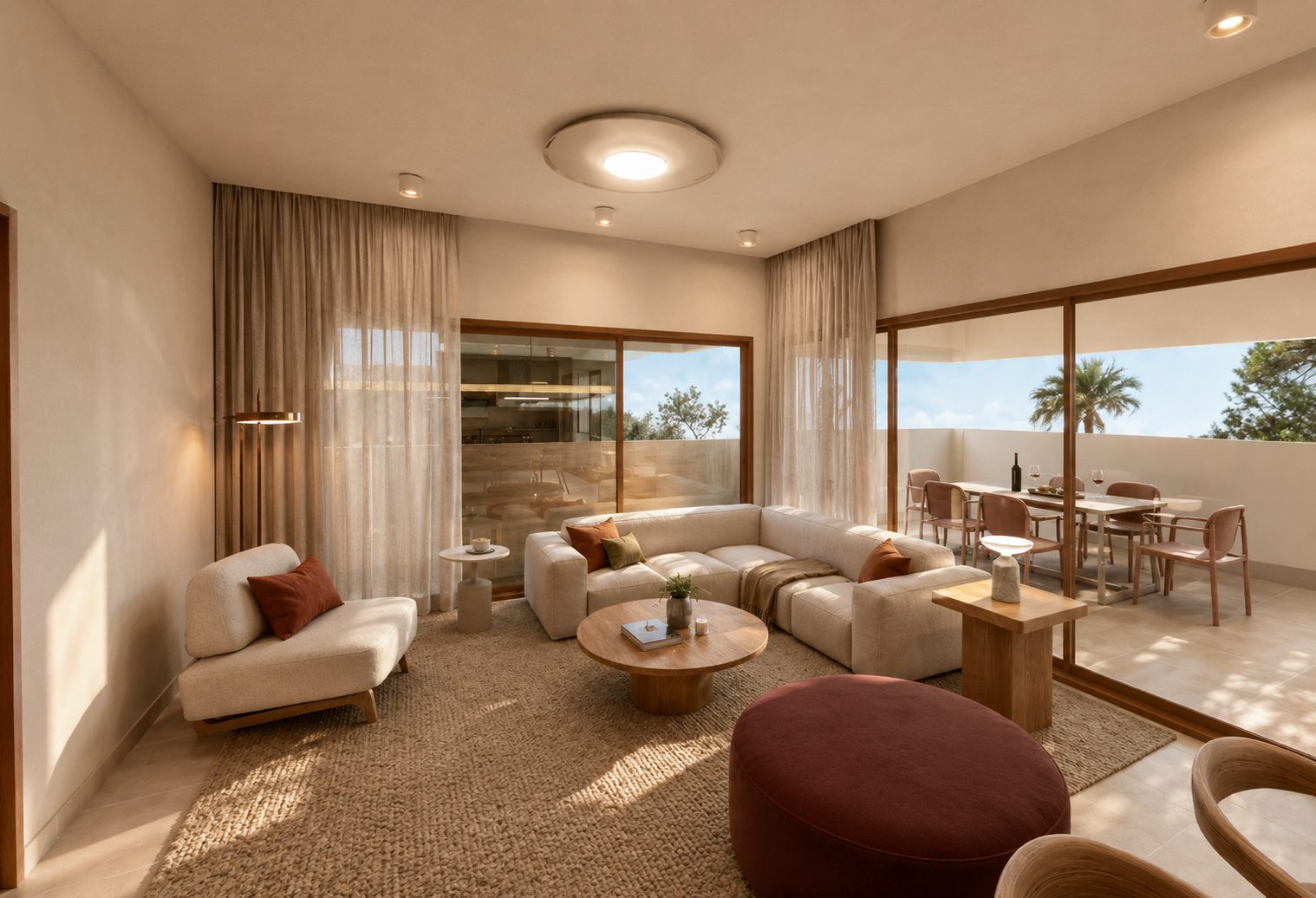
This is where Itza differs from a turnkey-furnished purchase. An owner here has a genuine choice to make about where the contents come from, and only part of that choice touches customs.
Sorting the contents: buy locally, carry, or ship
A useful way to plan is to sort every item on your list into one of three columns before you price anything. The first column is what you buy from a retailer inside the Dominican Republic. The store is the importer of record for anything it brought in, so the duty was settled before the item reached the showroom and you simply pay the shelf price. For bulky, replaceable pieces such as mattresses, outdoor furniture for the terrace and bed frames, this column usually wins on cost and on time.
The second column is what fits in your luggage on the trips you will make anyway. The customs authority's traveller manual lets ordinary personal effects in without declaration, and adds a gift and merchandise allowance of up to US$500 in total, usable once every 3 months. Linen, favourite knives, a few pictures and a coffee machine can arrive over two or three visits without a customs form ever being more than the routine arrival declaration.
The third column is what you ship. That is the only column where you become an importer yourself, and it deserves the most scrutiny: a sentimental piece, a sofa you cannot replace, a library of books. Keep that column short and specific, because everything in it will be classified, valued and taxed on its own terms.
| Item | Usual route for an Itza owner | Customs exposure |
|---|---|---|
| Stove, fridge, oven, washer, dryer, air conditioning | Fitted at handover | None: already installed |
| Mattresses, bed frames, terrace furniture | Dominican retailer | None in your name; the store imported it |
| Linen, kitchenware, small décor | Luggage over several trips | Personal effects; gifts up to US$500 every 3 months |
| Laptop and tablet | Carried | 1 of each per traveller enters tax-free |
| Heirloom furniture, a large book collection | Shipped as cargo | Formal import: tariff band plus 18% ITBIS on CIF value |
What a shipped container is actually taxed on
Once goods leave your column of carried items and travel as cargo, two separate charges apply. The tariff comes first: Ley 146-00, which reformed the older Ley 14-93 schedule, places every tariff sub-heading in one of five bands, 0%, 3%, 8%, 14% or 20%. A dining table and a box of books can land in different bands, so no honest page can quote one rate for furniture. The second charge is ITBIS, the Dominican value-added tax, at 18%, which DGII says is paid together with the tariff on an importation.
Both are calculated on the CIF value: what the goods cost, plus insurance, plus the freight that carried them. That is the detail people underestimate. The price of moving a piece across the Caribbean becomes part of the value the duty is charged on, so an old sofa that cost little can still carry a meaningful bill once its freight is added to its value.
Before booking anything, run the packing list through the tax simulator the Dirección General de Aduanas publishes on its SIGARD portal, which estimates the liquidation without needing a login, and then have a licensed customs broker classify it. Treat both as estimates: the authority's own liquidation is the figure you pay. If you are shipping from the United States, note that the CAFTA-DR trade agreement lets most U.S.-origin goods in duty-free, but origin is decided by the agreement's rules; a sofa bought in Florida and made elsewhere is not U.S.-origin.
The household-effects exemption depends on residency, not ownership
Dominican tariff law does provide a duty-free lane for a household move. Article 13 of Ley 146-00 exempts from tariff duties the personal and household effects of foreigners who come to live in the country permanently, and those of Dominicans returning after 2 consecutive years abroad. The customs authority's own exoneration form cites that article, literal D.
The condition is the part that matters to an Itza buyer. The authority's published requirements describe the qualifying foreigner as someone who has already obtained a Dominican residence permit. Signing for a residence at Itza is a property transaction; it does not issue a residence permit, so on its own it does not open this exemption. Two more limits follow from the statute and the authority's notes: the benefit can be granted to a person only once, and the shipment is expected to match the needs of a household rather than stock a second one.
The file itself is made in person at the customs authority by appointment. Its published list asks for the original bill of lading, the tax-liquidation sheet, a valid passport with copies of every page, the household-effects declaration form and, where relevant, a marriage or divorce certificate. That list dates from an older edition and the authority says it is revised over time, so confirm it with your broker. Also ask the broker, in writing, whether an approved file clears ITBIS as well as the tariff: Article 13 is written against tariff duties, and the fact base behind this page does not settle how the two interact.
-
Decide whether you are relocating The exemption is written for people who come to live in the country. An owner who will visit and rent the residence between stays is outside it.
-
Obtain residency first The customs authority asks for a residence permit already granted. Ownership and residency are separate files handled by separate authorities.
-
Keep the shipment to one household The benefit is granted to a person once, so spend it on the real move rather than a first half-shipment.
-
Let a broker file it A licensed customs broker assembles the documents, classifies anything outside the exemption and confirms how ITBIS is treated.
After you move in: parcels and online orders
Much of what finishes a home arrives in small boxes after the keys are handed over: curtain rails, a lamp, spare parts. Courier shipments whose FOB value, meaning the goods alone without freight, is at or below US$200 enter without import taxes, and the only charge on them is the rate set by Decreto 627-06 of US$0.25 per kilo cleared.
Two rules sit behind that threshold. Every online buyer receiving goods by courier must first be enrolled in the Registro Único Aduanero, the customs register created by Norma 01-2018. And splitting one purchase into several parcels to stay under the line is presumed when similar goods reach the same person, or related people, within 30 days. Plan larger orders as what they are.
For bigger post-handover purchases, the logic of the sorting exercise still applies: a Dominican retailer has already cleared its stock, and your delivery address is a short drive from the retail areas of Punta Cana, with the airport about 16 minutes from the towers.
An order of decisions between now and handover
With delivery planned for Q4 2029, there is time to make these choices in a sensible order rather than all at once in the final month. The sequence below is the one that avoids the two classic mistakes: paying duty on a container that residency would have exempted, and spending the once-only exemption on a partial shipment.
None of it replaces advice on an actual shipment. For anything bigger than a suitcase, a licensed Dominican customs broker is the person who classifies goods, quotes the charges and tells you what the authority requires on the day you ship. The traveller allowances quoted here come from the manual edition the authority launched on 27 November 2025; re-read it before you travel.
- While the towers are built Choose your layout and list the rooms The layout sets the size of the list. Sort each item into buy locally, carry, or ship.
- Well before handover Settle the residency question If you are relocating and want the household-effects exemption, residency comes before the shipment, not after.
- Q4 2029 Handover of an equipped, unfurnished residence Appliances and air conditioning are already fitted; furniture arrives from the store, your luggage or your shipment.
- After moving in Register for courier imports Enrol in the Registro Único Aduanero before ordering online, and keep single orders whole.
Common questions
- Does buying at Itza let me bring my furniture into the Dominican Republic duty-free?
- Not on its own. The household-effects exemption in Article 13 of Ley 146-00 is written for foreigners who come to reside permanently, and the customs authority asks for a residence permit already granted. A property purchase is not a residence permit, so a buyer who ships furniture without residency is making an ordinary taxed import.
- Is it cheaper to ship my own furniture or buy it in Punta Cana?
- It depends on the piece. Shipped goods pay a tariff band of 0% to 20% plus 18% ITBIS, calculated on value plus freight and insurance, on top of the freight itself. Bulky, replaceable items usually cost less bought locally; a piece you cannot replace may justify shipping. A customs broker can classify your list before you decide.
- Do I need to buy appliances for an Itza residence?
- No. Every residence is delivered with a stove, fridge, oven, washer and dryer, plus VRF air conditioning. The residences are unfurnished, so furniture, textiles and décor are the owner's to source.
- How often can I bring gifts or new items in my luggage?
- The customs authority's traveller manual allows merchandise and gifts up to US$500 in total, and the benefit can be used once every 3 months. Ordinary personal effects such as clothes, toiletries and books sit outside that figure and enter without declaration.
Want the details for your own situation?
Ask about availability, layouts or the buying process, and someone from the sales team will get back to you.
Get in touch