Investing in the Dominican Republic, one projection at a time
Most writing about investing in the Dominican Republic stays at the level of the country: the visitors, the growth, the tax incentives. This guide goes one level down and takes a single documented case apart. Itza Golden Residences, 52 residences in Golden Lakes, Cap Cana, publishes a projected return of 8-10%. Below is what that projection assumes, what it does not show, and what you should check before treating any Dominican rental projection as a number to plan around. It is a projection, not a guarantee.
The country case, kept to three dated readings
Three official readings describe the setting without promising anything about a single property. On the Banco Central's figures, US$5.03 billion of foreign direct investment entered the country in 2025, 11.3% more than in 2024 and a record for a single year; on its preliminary sector split, real estate took 15.7% of that inflow. The Ministry of Tourism recorded 11,676,901 visitors in 2025, the most in the country's history. And the Banco Central's tourism-flow report shows that 71.9% of foreign non-resident arrivals in 2025 came through Punta Cana International Airport, 16 minutes by road from Itza.
Each of those figures belongs to one year and one publisher, and none of them is a forecast. A record year for investment inflows says nothing about what one apartment will earn, and national visitor counts are not bookings. What they do establish is that the rental market an investor here is entering is real and large. The rest has to be judged property by property.
One legal point makes that judgement possible for a foreigner: a buyer from abroad can take registered title to Dominican property personally, exactly as a Dominican would, and does not need to live in the country to do so.
Itza's projection, assumption by assumption
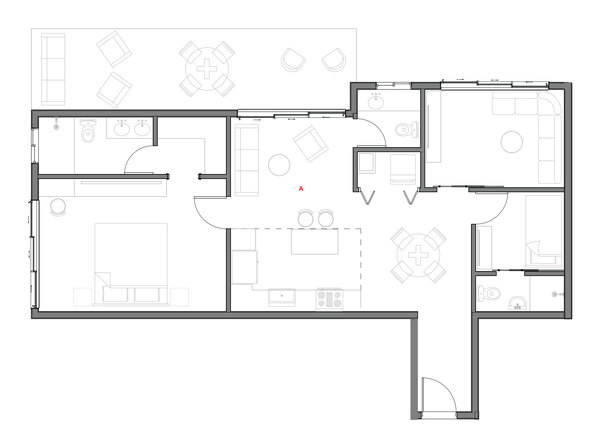
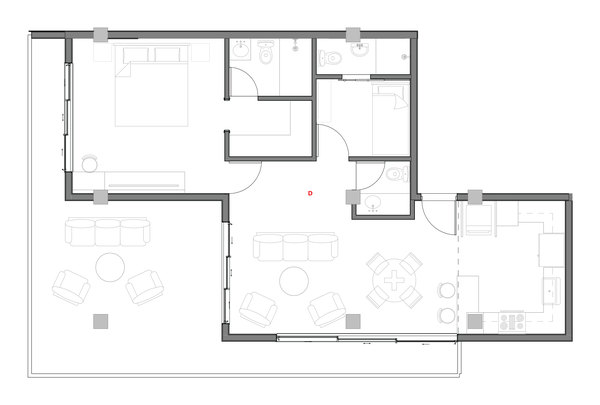
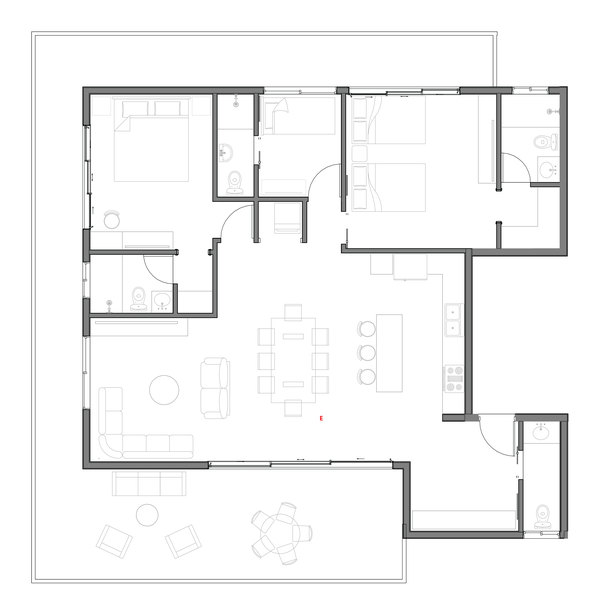
The 8-10% range comes from the developer's own ROI sheet, and its basis is specific. The model is a two-bedroom residence priced at $431,400. It assumes the residence is booked 65% of the year at an average nightly rate of $276. From the rent it deducts a management fee, operating costs, the condominium fee and insurance, and a reserve for furniture and equipment. What remains is a projected net return of 8.2%.
The top of the range is reached differently. It rises to about 10% only if the 28 nights a year the owner keeps for personal use are counted as though they were income. Those nights have a value to you, but they are not cash, so an investor comparing Itza with a bond or a fund should compare against the 8.2% figure.
Two of the inputs are assumptions rather than observations: occupancy and the nightly rate. Neither has been measured at Itza, because Itza is not yet built. The ROI calculator on the Itza home page opens at the same 65% occupancy and a 20% management fee; move both and watch how quickly the result changes.

What the projection leaves for you to add
The basis of the ROI sheet does not mention tax on rental income, and for a foreign owner that is the largest single item. A non-resident owner's Dominican rental income is typically subject to a 27% withholding on the gross rent, with no deductions, as a single and definitive payment. Rates change, so confirm the current one with a Dominican accountant before you rely on it.
Short stays carry a second tax. Tourist accommodation is subject to 18% ITBIS, and the host is the one liable for it, not the booking platform. Whether that is charged on top of the nightly rate or absorbed within it changes what the $276 assumption really means.
The third item is furniture. Itza's residences are delivered unfurnished, with the stove, fridge, oven, washer, dryer and air conditioning in place. The sheet sets aside a reserve for furniture and equipment, but a residence cannot be let until it is furnished, so ask how the model treats that first fit-out and budget for it either way.
CONFOTUR: expected, and priced in as though it were certain
The sheet models property tax at 0%, and it can do so only because it assumes CONFOTUR. Law 158-01, the statute that promotes tourism development, exempts first buyers at a qualifying project from the 3% transfer tax and from the 1% annual property tax (IPI), a tax that in any case falls only on the part of a property's value above a threshold revised each year. The law provides a fifteen-year IPI exemption for qualifying projects; how it applies to a particular residence and owner is a question for your attorney.
At Itza, those benefits are expected, not granted: the developer describes the project as one that is expected to carry them. The exemptions are also not automatic once granted, since they must be filed and recorded on the title, and they belong to first buyers from the developer, not to anyone who buys from you later.
CONFOTUR concerns property taxes. Rental income is assessed separately under its own rules, so the exemption should not be read as improving what the rent earns after tax.
The risks that belong to buying off-plan
A pre-construction purchase commits money years before it can earn anything. Itza's delivery is planned for Q4 2029, and a projection that begins at delivery tells you nothing about the years before it. Delay is the ordinary risk of any building site, so the date to use in your own planning is the contractual one, read by your attorney.
The developer is KMA Developments, a Dominican company founded in 2015 that has participated, as contractor, in more than 3,000 housing units and works as a direct infrastructure contractor to Cap Cana. That is a record of building, and it is worth verifying in the way any record should be.
Liquidity is the other consideration. Of the 52 residences, 27 were still available on the September 2026 price list. A reservation is made with $5,000, and every commitment after that should be read against the contract rather than against a projection.
How to test the number yourself
A projection is useful precisely to the extent you can reproduce it. Five checks turn Itza's 8-10% into a figure of your own.
-
Ask for the ROI sheet Read the full basis rather than the headline: the $431,400 model, the 65% occupancy, the $276 rate and every cost line.
-
Use the net figure Compare other investments with the 8.2% net, not with the 10% that counts 28 owner-use nights as income.
-
Subtract the taxes it does not show Apply the 27% non-resident withholding on gross rent and decide how the 18% ITBIS is handled, with a Dominican accountant.
-
Stress the assumptions Lower the occupancy in the home-page calculator and see how the result moves; neither input has been measured at Itza.
-
Read CONFOTUR as expected Model the property tax as it would stand without the exemption too, and have your attorney confirm the project's status before closing.
Common questions
- Is 8-10% a guaranteed return at Itza?
- No. It is the developer's projection, not a guarantee: 8.2% net on a $431,400 two-bedroom model at an assumed 65% occupancy and $276 average nightly rate, rising to about 10% only when 28 owner-use nights are counted as income.
- Can a foreigner invest in property in the Dominican Republic?
- Yes. A foreign national can buy and hold Dominican real estate in their own name, with registered title, on the same terms as a Dominican citizen and without residency.
- Does the projection include income tax on the rent?
- The basis of the ROI sheet does not mention it. Non-resident owners are typically subject to a 27% withholding on gross rental income, and short stays carry 18% ITBIS owed by the host. Confirm current rates with a Dominican accountant.
- Is Itza a CONFOTUR project?
- It is expected to carry CONFOTUR benefits, but they are not yet granted. The projection models property tax at 0% on that expectation, so check the status with your attorney before relying on it.
Want the details for your own situation?
Ask about availability, layouts or the buying process, and someone from the sales team will get back to you.
Get in touch