Dominican food, explained from a kitchen in Cap Cana
Dominican food is Caribbean home cooking built on rice, beans, plantains and slow-stewed meat, with fried fish on the coast and fruit, fresh juice and sweet black coffee between meals. The Ministry of Tourism traces it to Taíno, African and Spanish kitchens, and its plates are quick to learn: this guide names the ones that matter, follows a Dominican day of eating, then turns practical for anyone living at Itza Golden Residences in Cap Cana, from what a restaurant bill adds to where the groceries are.
What is Dominican food, and which plates should you learn first?
Dominican cooking is everyday home food, and a handful of plates cover most of what you will be served. The Ministry of Tourism describes the cuisine as a blend of Taíno, African and Spanish traditions, and its own short list opens where Dominicans do, with la bandera dominicana, “the Dominican flag”: white rice, beans and stewed chicken, beef or pork. The name comes from the colours, the beans standing for the red and the rice for the white. Rice cooked in one pot with the beans and the sofrito is moro; rice cooked with meat or seafood is locrio; and the crisp layer left at the bottom of the iron pot, the caldero, has a name of its own, concón.
Three more dishes complete the core. Sancocho is a thick stew which, in its classic Dominican form, combines seven meats with root vegetables and other vegetables; families make it for an occasion rather than a weeknight. Mofongo is fried green plantain mashed in a pestle and mortar with garlic, olive oil and pork crackling, sometimes made with cassava or ripe plantain instead and filled with chicken, seafood or shrimp. And on the coast the standing order is fried fish with tostones, slices of green plantain fried twice, served on the beaches where the day's catch comes in.
Expect seasoning rather than heat. Most dishes start from sofrito, which Dominicans call sazón, a sautéed base of herbs, spices and aromatics, and the spicing is mild by Caribbean standards; a few dishes, braised oxtail among them, are made hot with local chillies.
How does a Dominican day of eating run?
Breakfast is the place to meet mangú: green plantains boiled and mashed smooth with a little of their cooking water, then topped with red onion. Served with fried cheese, Dominican salami and fried eggs it becomes los tres golpes, “the three hits”, and mangú is widely described as the national breakfast, though it turns up at lunch and dinner too. The cheese is queso de freír, a firm frying cheese that browns in the pan instead of melting. Alongside come coffee, which a long-running travel guide says most Dominicans drink black with a great deal of sugar, and orange juice squeezed when you order it.
Lunch is the hearty plate of the working day, la bandera in one form or another, and the same guide puts it between noon and 2pm. It is what the comedor sells: an unpretentious, family-run eating house serving the day's stews, rice and beans. Evenings vary more from house to house, and sources disagree on whether lunch or dinner is the main meal, so let the household set the rhythm. Two everyday standbys appear in a Dominican newspaper's list of the country's fast foods: calentao, leftovers fried up again in the pan, and fritura, fried food sold from a glass display case, which the list calls a breakfast that also serves for dinner.
What do Dominicans eat on the street, at the beach and from the colmado?
Street food here is mostly fried, quick and often eaten late. That newspaper list of the fast foods that changed the country puts pica pollo, fried chicken, first, crediting the local Chinese community with making it available everywhere, usually beside chofán, a Dominican fried rice. Second comes the chimi, a burger topped with cabbage slaw and sold from street carts, which the list calls the companion of parties and late nights. Yaniqueques are discs of fried dough, little more than flour, fat and salt, and the snack of beaches such as Boca Chica; empanadas, also called pastelitos, are fried turnovers filled with beef, chicken, pork, cheese or conch; and bread with avocado makes the list as a meal in its own right.
A day at the beach or the river has a menu of its own. Fried fish with tostones is bought where it is landed, while Dominican groups often bring their own pot of espagueti de playa, spaghetti cooked in a tomato sauce with Dominican salami and eaten straight from the pot on the sand.
Then there is the colmado, the small neighbourhood shop where, a travel guide notes, most Dominicans do their shopping. Colmados sell drinks, a short list of groceries and some fresh produce, often in very small quantities, down to a single clove of garlic, and many double as a meeting place for the street, cold beer included.
Which fruits, sweets and drinks should you know by name?
Fruit is the lighter half of eating here, and much of it has a Dominican name of its own. Passion fruit is chinola, pressed into juice and preserves; papaya is lechosa; a banana is a guineo; and limoncillos, tiny lime-like fruits, are sold in bunches. Mangoes keep a season: the Minister of Agriculture has described the normal harvest as running from March to August with its peak in June, the month the southern town of Baní holds its mango fair. Avocados ignore the calendar, because an inter-American agriculture institute notes that the country's different growing regions, altitudes and varieties keep them available all year.
Sweets are rich and tied to the calendar too. Habichuelas con dulce, red beans cooked into a sweet, spiced cream with milk, sugar and sweet potato and finished with small biscuits, belongs to Lent and above all to Good Friday. Bizcocho dominicano is a cake filled with pineapple jam and frosted with meringue, and dulce de leche and majarete, a corn pudding, are common desserts.
To drink, morir soñando, “to die dreaming”, is orange juice with milk, sugar and ice, and chinola juice is a popular choice. Rum, beer and coffee are the everyday drinks. Mamajuana is rum, red wine and honey left to steep in a bottle with tree bark and herbs, usually kept at room temperature and poured into a shot glass.
| Name | What it is |
|---|---|
| Mangú | Boiled green plantain, mashed smooth and topped with red onion |
| Los tres golpes | Fried cheese, Dominican salami and fried eggs, served with mangú |
| La bandera | White rice, beans and stewed chicken, beef or pork |
| Moro | Rice cooked in one pot with beans and sofrito |
| Concón | The crisp rice from the bottom of the caldero |
| Tostones | Slices of green plantain, fried twice |
| Chinola / lechosa / guineo | Passion fruit / papaya / banana |
| Morir soñando | Orange juice with milk, sugar and ice |
What does a meal out add to the bill, and which rules apply?
Read the bill before you reach for a tip. Two lines sit below the menu prices: a 10% service charge, known as the propina legal, and the 18% ITBIS, the Dominican value-added tax. The service charge is compulsory, and because it is widely reported not to reach the person who served you reliably, leaving a little extra in pesos for good service is the custom. This is widely documented practice rather than a statute this page can quote, so ask if a bill looks different.
Seafood follows a calendar. Each year the environment ministry and the fisheries council announce a closed season for lobsters and several land crabs from 1 March to 30 June, banning their capture, storage and sale while they reproduce, and they ask restaurants, hotels and supermarkets not to buy them in those months. A lobster dinner in spring deserves a question about where it came from.
Food safety is ordinary travel sense. The Government of Canada's advice for the country lists salmonellosis as a common illness among travellers, carried by raw or undercooked poultry and eggs and by fruit and vegetables, and recommends food that is properly cooked and still hot when served; its rule for everything else is boil it, cook it, peel it, or leave it. For vegetarians, a long-running travel guide warns that outside the major cities the choice often narrows to rice and beans. Plantains, root vegetables, avocado, eggs and fruit widen it, and in a comedor it pays to ask how a dish was made.
Where do you buy food near Cap Cana?
Inside Cap Cana, the community's own dining directory covers the small weekly shopping: minimarkets in the Las Canas commercial centre and beside the marina, a gourmet market selling meat, charcuterie, bread and wine, a fish counter selling the local catch of the day, and an eco-store with organic produce and refills. The same directory groups the community's restaurants around the marina, the resort hotels, Juanillo Beach and the golf and equestrian clubs, and points residents to a local food-delivery app.
For a full weekly shop you leave the gates. The large supermarkets and hypermarkets sit in the shopping centres on Avenida Barceló and around Bávaro, and a routing measurement from Itza's map pin puts the Avenida Barceló cluster about 19 minutes away by car, roughly 12 miles. There, as in the colmados, food is weighed and priced by the pound, the libra: the consumer-protection agency's own surveys quote chicken by the pound and rice in 10-pound packs, so a recipe written in pounds needs no conversion. Fresh fruit and vegetables sold in their natural state fall outside ITBIS under a ruling from the tax authority, while processed and packaged groceries generally carry it.
What does this mean for an owner at Itza Golden Residences?
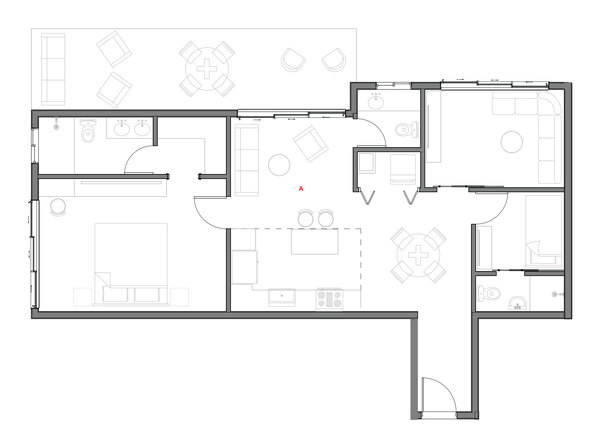
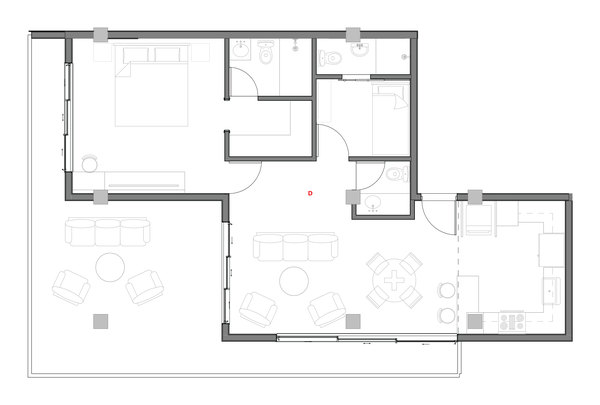
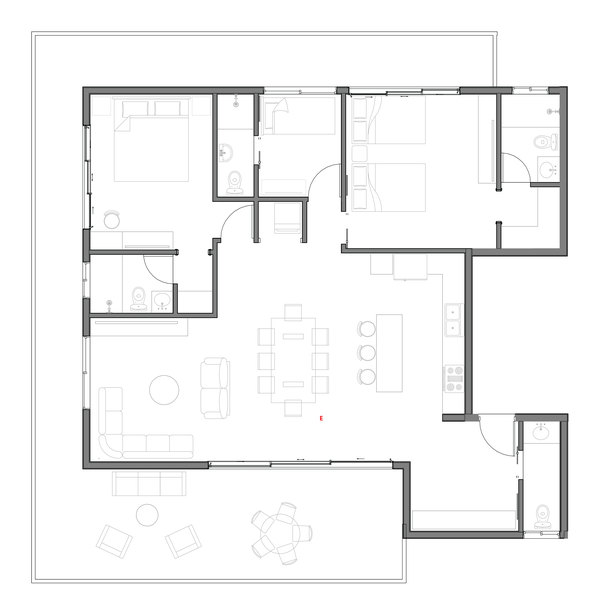
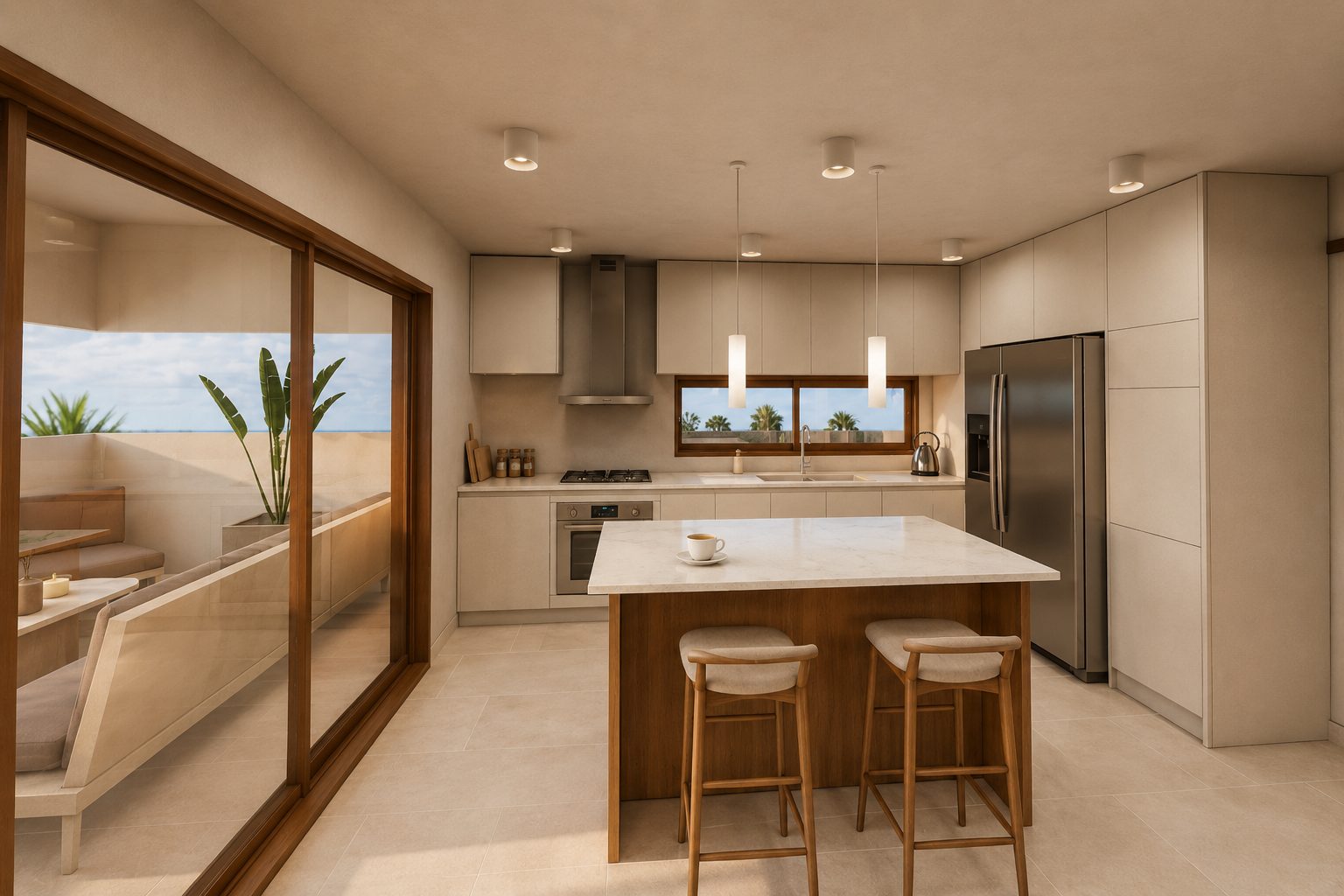
Itza is 52 residences in four stepped, five-level towers facing the lake at Golden Lakes, in Cap Cana, planned for delivery in Q4 2029, and its kitchens are drawn for people who cook. Every residence has an island kitchen with a breakfast bar and quartz tops and is delivered with a stove, oven and fridge, plus a washer and dryer. The homes are unfurnished, so the pots, the pans and the iron caldero a good concón needs are yours to choose. Beyond the front door, the building adds a restaurant open 24 hours for snacks, quick meals and drinks, a private sports bar and the lake club with its lakeside beach.
The distances suit the way people eat here. Marina Cap Cana and Juanillo Beach are each about 8 minutes away, for a waterfront lunch or fried fish by the shore; the minimarkets, the gourmet market and the fish counter are inside the same gates; and the big supermarkets are about 19 minutes out, an easy weekly run. Arriving from the airport, about 16 minutes away, the first evening's meal can come from the on-site restaurant and the first shop can wait for the morning. Owners who let the residence on short stays, which Itza allows, can leave guests the name list above, from mangú to morir soñando, as a head start on the menu.
Common questions
- What is the national dish of the Dominican Republic?
- La bandera dominicana, which the Ministry of Tourism calls a gastronomic emblem: white rice, beans and stewed chicken, beef or pork, named for the flag because the beans give the red and the rice the white. It is the standard midday plate in homes and comedores. Sancocho, a stew that in its classic form uses seven meats, is the dish kept for family occasions.
- What is a typical Dominican breakfast?
- Mangú with los tres golpes: boiled green plantain mashed smooth and topped with red onion, served with fried cheese, Dominican salami and fried eggs. Coffee comes black and sweet, often with fresh orange juice. Mangú also appears at lunch and dinner, so it is not strictly a morning dish.
- Is Dominican food spicy?
- Mostly not. Dominican cooking is seasoned rather than hot: it starts from a sofrito of herbs, spices and aromatics that Dominicans call sazón, and its spicing is mild compared with other Caribbean kitchens. A few dishes, such as braised oxtail, are made hot with local chillies, so ask when in doubt.
- Can vegetarians eat well in the Dominican Republic?
- Yes, with some planning. A long-running travel guide warns that outside the major cities vegetarians often end up with rice and beans, so ask how a dish is made before ordering. Plantains, root vegetables, avocado, eggs, fried cheese and the country's fruit fill the gap, and a home kitchen makes the rest easy.
- Can you cook Dominican food at home at Itza?
- Yes. Every Itza residence has an island kitchen with a breakfast bar and is delivered with a stove, oven and fridge, though unfurnished, so cookware is yours to choose. Inside Cap Cana there are minimarkets, a gourmet market and a fish counter, and the large supermarkets, where food is priced by the pound, are about 19 minutes away by car.
Want the details for your own situation?
Ask about availability, layouts or the buying process, and someone from the sales team will get back to you.
Get in touch